
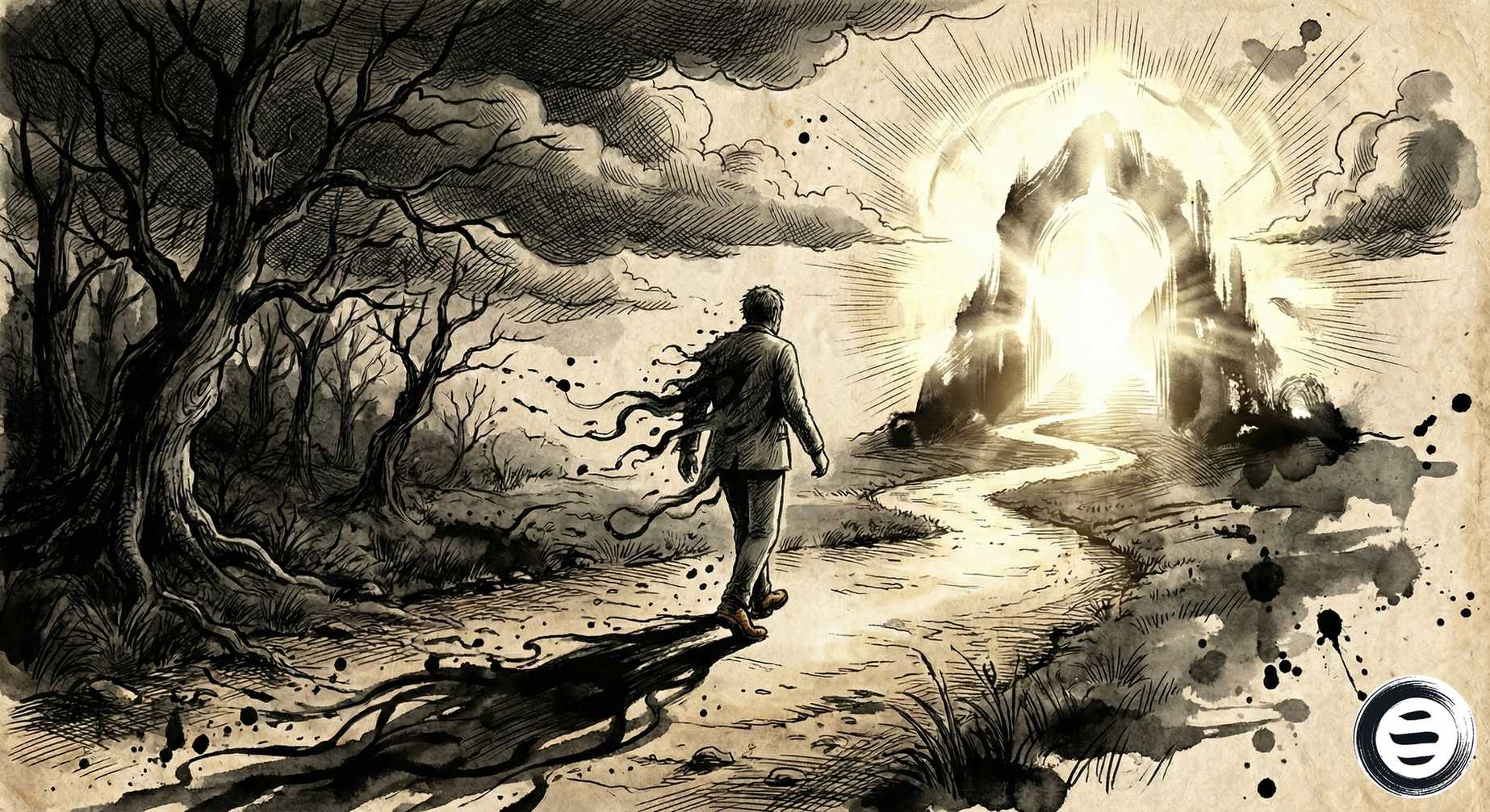
The Lost Treasure
As I grow older, I am increasingly convinced that wisdom comes not from knowing more, but from questioning anything not personally experienced, from shedding one’s conditioned beliefs, attachments, identities, and false selves.

As I grow older, I am increasingly convinced that wisdom does not lie in knowing more, but rather in questioning truths we haven’t experienced firsthand, in becoming aware of our conditioning, our attachments, our identities, and false selves and stripping them all away. That is how we rediscover our innate essence.
We all arrive in this world as pure, untouched, innocent beings, representatives of a pure consciousness in its natural state.
Over time, that pristine consciousness gets tainted and dulled by parents who, even if well-intentioned, carry unresolved issues and reflect them onto their children, as well as by a broader social environment composed of others in a similar state.
Everyone instills in us the truths they believe, along with their own desires and wishes. In the end, no matter which background we come from, we become products of that particular environment. By the time we reach adulthood, precious little remains of our original essence, our once-pure, innocent nature.
This unavoidable process, through which we all must pass in one way or another, sets the stage for the quest of rediscovering ourselves, of returning to our core.
It is less about accumulating knowledge than it is about challenging what we think we know, recognizing how our behaviors have been conditioned, how our sense of self is shaped, and how we’re compelled to protect that false identity. Ultimately, it is about recovering the pure and childlike wonder, curiosity, and beauty we once had.
In short, our human story is one of searching for something we once had and lost.
But the sad truth is that many of us are not even aware of having lost anything. We drift through everyday tasks, the fights we choose, the self-definitions we cling to, mindlessly repeating the same patterns in different settings with different people.
All too often, it takes a crisis -an unexpected illness, a sudden death, a major loss- to break us free from these habitual modes of being, as we typically find the courage to confront ourselves only when backed into a corner or when our old life becomes too painful to bear.
Perhaps Niyazi Mısri was referring to just this when he wrote:
I sought a cure for my pain, yet my pain became my cure.
The hopeful truth is that change is always possible, as long as we recognize our need for it. None of us is obliged to be the same person we were a year, a day, or even a minute ago. We can change; we can recover that lost treasure.
This is the very purpose of our existence and the only true path to genuine happiness. It is not about acquiring more, rather, it is about finding again what we have always possessed but somehow misplaced.


Comments